- InvestorStartup
- Posts
- From Streaming Triumphs to AI Showdowns
From Streaming Triumphs to AI Showdowns
Future of Markets and Innovation
Quick Peek:
Streaming Services Hit Profitability – Disney+ turns a profit, but can they keep it up?
Workday’s AI Workforce Shift – "Digital employees" are here, but at what cost
JD Vance’s AI Regulation Stance – The U.S. and Europe are taking very different AI paths.
No U.S. Digital Dollar (For Now) – The Fed shuts down CBDC speculation.
OpenAI’s Record-Breaking AI – A leap in AI intelligence but what does it mean?
Thomson Reuters Wins AI Copyright Case – A major ruling with massive implications.
Streaming Services Finally Achieve Profitability: A Lesson in Patience
In 2024, streaming services like Netflix, Disney+, Max, and Spotify achieved profitability after a decade of burning money. Netflix has become the envy of the entertainment industry with a 22% profit margin, earning $8.71 billion in profits last year. Disney's streaming division, including Disney+ and Hulu, reached its second straight quarter of profitability. Spotify achieved its first full year of positive profits
Cost Cutting Worked: Disney slashed 7,000 jobs and trimmed expenses by $7.5 billion.
Ad-Supported Growth: Monetizing through ads has been a game-changer.
Challenges Remain: ESPN+ is struggling, and subscriber losses after price hikes show that retention is tricky.
Profitability in streaming is possible—but it requires a delicate mix of pricing strategy, subscriber growth, and cost control.
Meanwhile, in the corporate world, AI is reshaping workforce dynamics.
Workday’s AI Workforce Shift: Efficiency or Mass Layoffs?
Workday, a leader in enterprise software, recently unveiled its latest innovation: AI-powered "digital employees" designed to work alongside human staff. The company insists that these AI systems are intended to enhance productivity rather than replace jobs.
However, this announcement coincides with the layoff of 1,750 employees, roughly 8.5% of Workday’s workforce, leading many to question whether AI is being used as a tool for corporate downsizing.
This situation reflects a larger trend in the labor market. As AI continues to improve, companies are increasingly automating routine tasks, allowing them to cut costs and increase efficiency.
While some argue that AI enables workers to focus on higher-value tasks, others worry about widespread job displacement. The key challenge for businesses will be balancing technological advancement with ethical employment practices, ensuring that workers are not simply replaced but reskilled for new roles.
This debate extends to AI regulation on the global stage…

JD Vance Warns Against Over-Regulation at Paris AI Summit
U.S. Vice President JD Vance criticized Europe’s strict AI regulations, arguing they could stifle innovation. His stance? A hands-off approach emphasizing that AI should develop freely without excessive government interference..
Europe’s AI Crackdown: Europe is moving in the opposite direction. The EU’s AI Act imposes heavy compliance costs on companies. Making it harder for smaller companies to compete.
China’s AI Strategy: China is rapidly advancing its AI sector with strong state-backed initiatives, raising concerns about technological competition and security risks.
AI regulation will shape the future of the industry. Companies operating in the U.S. may benefit from a more innovation-friendly environment,
And when it comes to regulation, the U.S. is also making a major financial policy decision…
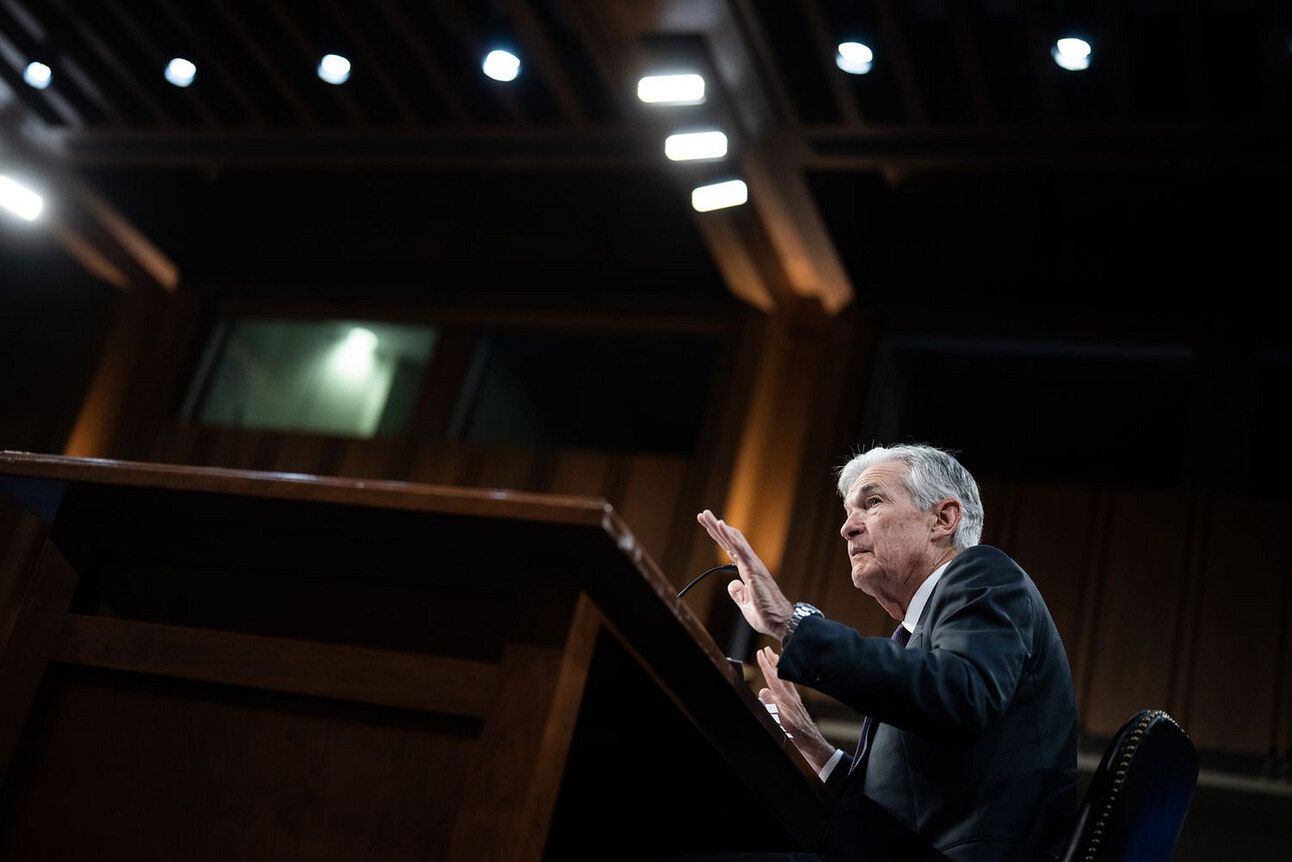
No U.S. Digital Dollar Under Jerome Powell’s Watch
Federal Reserve Chair Jerome Powell has ruled out the introduction of a U.S. Central Bank Digital Currency (CBDC) during his tenure, which runs until May 2026. Powell made this announcement during a Senate Banking Committee hearing.
Privacy & Freedom Concerns: Critics fear government overreach in financial transactions.
Other Countries Push Ahead: China, Russia, and Japan are actively developing CBDCs.
Crypto and private payment innovations will remain dominant in the U.S., unlike the state-backed digital currencies gaining traction elsewhere.
Meanwhile, OpenAI is pushing the limits of artificial intelligence…
OpenAI’s Deep Research AI Breaks ‘Humanity’s Last Exam’ Record
OpenAI’s Deep Research AI just set a new record on ‘Humanity’s Last Exam,’ a benchmark designed to test advanced reasoning capabilities.
🔹 26.6% Accuracy: A 183% improvement in just two weeks.🔹 Still Far from Human Intelligence: Even the best AI models score relatively low.🔹 Financial Reality: OpenAI expects to lose $14 billion by 2026, despite strong revenue from ChatGPT subscriptions.
AI is evolving at breakneck speed, but can it ever truly replicate human reasoning?
That brings us to a critical legal battle shaking up the AI landscape…

Thomson Reuters Wins Landmark AI Copyright Case
Thomson Reuters has won a pivotal AI copyright lawsuit against Ross Intelligence. The court found that Ross illegally used Westlaw’s copyrighted legal summaries to train its AI-powered research tool.
This decision marks one of the first major legal precedents in AI copyright law, setting stricter boundaries on how companies can use copyrighted materials for AI training.
Many companies rely on vast amounts of data to train their models, but this case shows that using copyrighted content without proper licensing can lead to serious legal consequences.
Fill the French Press